>
>
Education Forum on Heritage and Identity 2023

Education Forum on Heritage and Identity 2023

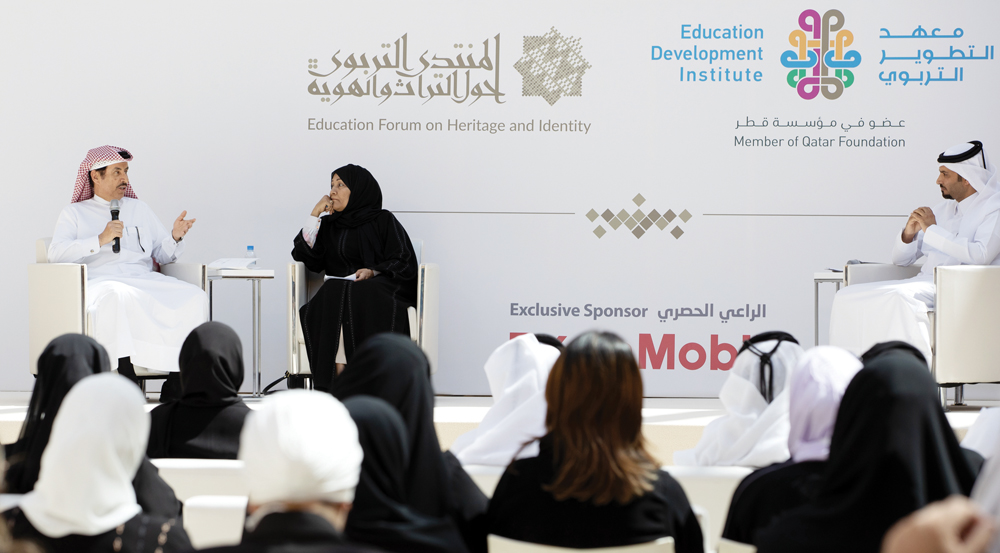
The third edition of the Education Forum on Heritage and Identity focused on “Teaching Arabic in Schools: Introductions and Strategies.

calendar
25/02/2023
calendar
1 Day
location
Doha Institute for Graduate Studies
star icon

About the Conference

The third edition of the Education Forum on Heritage and Identity focused on “Teaching Arabic in Schools: Introductions and Strategies.” The study day brought together Arabic language teachers, specialists, and education practitioners to explore effective teaching methods and advanced educational strategies, share experiences, and strengthen Arabic language learning through lectures, discussions, and interactive workshops.

Key Topics

Arabic Language,Teaching Strategies,Teaching Strategies,Educational Methods,Student Achievement,Interactive Workshops,Teacher Practice,Knowledge Sharing

What Educators Gained

New approaches to teaching Arabic language in schools
Practical strategies to strengthen students’ language skills
Insights from specialists and innovative Arabic language educators
Opportunities to share teaching experiences and best practices
Interactive approaches to support stronger student outcomes

Keynote Speakers and their Sessions

Keynote Speakers & Thought Leaders Featured Through The Years

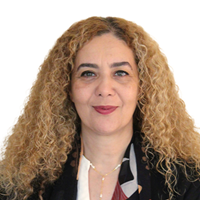
Dr. Hanadi Diya

Researcher in the field of historical linguistics. Her research work focuses on the development of the Arabic grammatical heritage, and the impact of this development on the learning and teaching of the Arabic language. Dr. Diya supervised the Queen Rania Academy project that targeted the development of standards for learning Arabic for native speakers. She also participated in the (AERO+) project, which developed and supervised the implementation of Arabic language standards as a universal language both in American and international schools. Ms. Hanadi Diya chaired the Arab Advisory Committee of the Council of American Schools in the Near East and South Asia (NESA) and was a member of its professional development committee. Additionally, she is currently a member of the Advisory Committee of Methodologies Journal. Mrs. Dayyah is the author of several books for programs for teaching Arabic to native speakers and speakers of other languages, for the elementary and lower secondary stages.

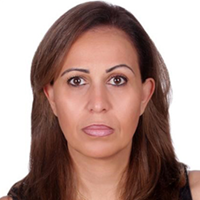
Dr. Ghadeer Hataba

Dr. Hataba holds a Ph.D. in the foundations of education, a Master's degree in educational leadership and curricula, and a Bachelor’s degree in Arabic language. She is a teacher of the Language A program in the Diploma Program, in addition to being a Lead Marker and IB-accredited trainer for the Arabic/diploma programs, and a Program Leader who participates in school accreditation.

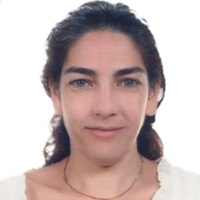
Ms. Ghada Haddad

An inquisitive educator with over thirty years of experience. Her educational and professional tours in multilingual environments have resulted in a rich and varied experience with regard to language learning and teaching. Her participation in this professional day and preparation for this course will be the best example of how language learning and teaching are closely linked to an inquisitive mindset.

Mr. Wasem Al-Kurdi

A poet, writer, researcher in educational methodologies, specialized in employing drama and the arts in education. He holds a Master's degree in Drama in Education from Birmingham City University, and a Bachelor’s degree in Arabic Language and Literature from Hebron University. He worked as a teacher of Arabic language and creative writing in Friends Schools - Ramallah, and worked as the director of the Educational Research and Development Center - A.M. Qattan Foundation. Al-Kurdi founded the “Drama in an Educational Context” summer school, initiated

Ms. Samar Mahfouz

A Lebanese Author of children’s and youth books and a translator. Samar graduated from the American University of Beirut. She worked in the field of education for several years before devoting herself to writing. To date, she has published more than 60 books in Lebanese and Arab publishing houses. She has translated more than 100 children's books from French, English, and Italian into Arabic. She offers creative writing workshops for children, and training workshops to teachers and librarians on encouraging reading, how to prepare library activities, and teaching the Arabic language in ways that are appealing to children.

Ms. Dorsaf Al-Kouki

She holds a Certificate in Advanced Studies in Arabic Language and Islamic Studies from the Sorbonne University-Paris, and a Diploma in Translation from the École Supreme des Translation and Interpretation (ESIT)-Paris, and she is a professor in Comparative Linguistics from the University of Paris III, and a professor in English Language and Civilization, from the University of Arts in Tunis. She is a consultant and trainer for the International Baccalaureate Organization in Europe, Africa and the Middle East. She provides consulting and accreditation visits services to diploma schools, supervising all remote training courses for the various International Baccalaureate programs within the primary, and lower and upper secondary stages of the Arabic, Turkish and Chinese languages, and provides training workshops in the diploma program. She is a member of the advisory board of Manhajiyat Journal.

Mr. Mohammed Zo’ubi

Mohammed Zoubi has been working in the education sector since 2004, starting as a teacher in the primary and secondary levels in private schools and public schools. Al-Zoubi joined the Arabic language team at the Queen Rania Teacher Academy in 2014. He directly contributed to the development of reading and writing materials for the Arabic Language Network. He was a member of the team that prepared the training material for training Syrian assistant teachers and Jordanian teachers in the Syrian refugee camps.

Mr. Yusry Al-Amir

Editor-in-Chief of Manhajiyat Journal and educational consultant of Arabic language teaching. He worked in the field of Arabic language teachers’ professional development in several countries. Mr. Al-Amir participated in various development projects for Arabic language programs, for example he served as a trainer with the "Tamam" initiative in the Faculty of Education at the American University of Beirut. He supervised the authorship of the Arabic Language Curriculum for the State of Djibouti. Mr. Al-Amir is the author of several books on teaching Arabic, including the book “Ya Hala” for non-native speakers of the Arabic language in the primary and intermediate stages. He also wrote special TV episodes on the Arabic language and literature.

Dr. Lina Al-Kouzi

She holds a PhD in Arabic language and literature, and has been working in the educational field for more than seventeen years.

Mr. Mohammed Al-Janahi

Mr. Al-Janahi is a Professional Learning Designer at the Education Development Institute at Qatar Foundation. He started his career as an engineer in the field of energy, and then moved to the field of education as a mathematics teacher through “Teach for Qatar” organization, and then worked as an officer in community outreach department of the organization. Mr. Al-Janahi holds a master's degree from Qatar University, majoring in curricula, teaching methods, and assessment. Al-Janahi made various contributions to the educational field in ways of delivering information, creating innovative educational experiences in the classroom, and was honored by several entities in the state of Qatar.

Ms. Amal Al-Hafi

Lead teacher of the National Subjects Department at Qatar Academy Msheireb. She holds a Bachelor's degree in Education, majoring in Arabic, from Qatar University. She holds a license in reading and recitation of the Holy Qur’an, and will soon earn a Master’s degree in linguistics (the science of sounds) from the same university. Al-Hafi has experience in the educational field for more than twenty years in public schools in the State of Qatar and the Qatar Foundation, and she participated in the establishment of Al-Arqam Academy, and many Arabic language departments in public schools and the Foundation’s schools. She also participated in many educational projects, such as preparing Arabic language curricula Siraj Program, Islamic Education Curriculum for Early Childhood. She received the Scientific Excellence Award, and has numerous educational and pedagogical achievements and contributions to the field.

speaker image

Cathryn Berger Kaye

Biography: Cathryn Berger Kaye travels throughout the United States and globally, providing professional and organizational development programs, conference keynotes, in-depth institutes, and tailored education and learning resources. Her expertise spans service learning, 21st century competencies, social and emotional learning, climate and culture, youth engagement and leadership, effective teacher strategies, and environmental sustainability, all towards infusing social justice into the mainstream of education. Her work exemplifies best teaching practices. Moving from Ideas to Action: Why Service-Learning Matters Session Description: Activating youth to improve the world – locally and globally: this is what we can do, together. We are more connected than ever. These last years have brought community needs to the forefront. Our students care, and they want to be participants and catalysts for change. With service learning as a reliable pathway, we can link academics to meaningful inquiry that provokes curiosity, discovery and inspires purposeful action. By also connecting to the United Nations Sustainable Development Goals, we can see how what happens within our classrooms connects youth to problem Stay connected with EDI Follow us on our social media channels Sign up for our newsletter to never miss an opportunity to engage with us.